



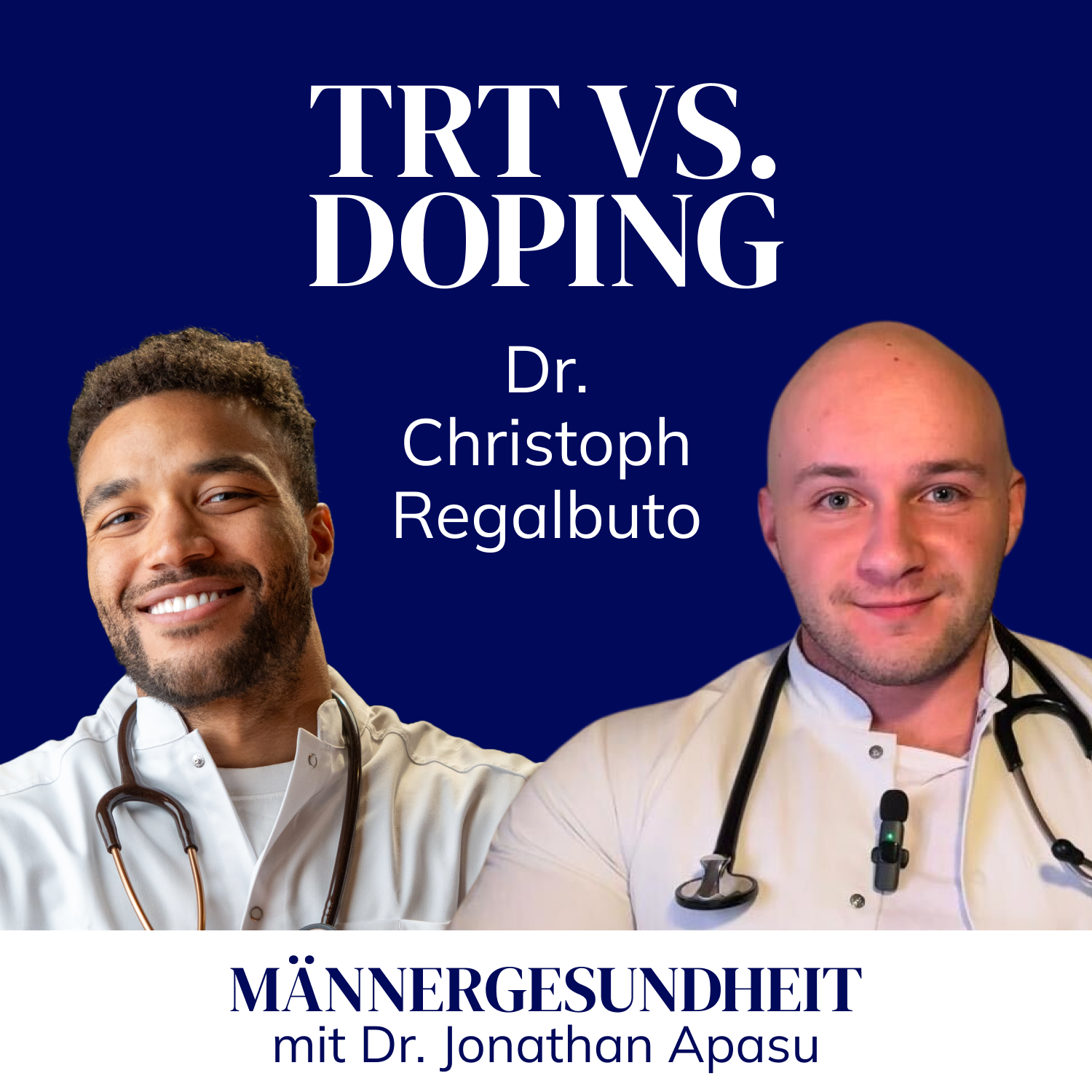
Testosterone – a vital hormone, but where is the line between replacement therapy and doping? Dr. Christoph Regalbuto is a physician, bodybuilder, and men's health expert. In this episode, he discusses the importance of testosterone, the risks of improper use, and the correct medical approach to therapy.
Topics in this episode:
- The difference between TRT and doping
- Testosterone deficiency: symptoms and diagnosis
- Why family doctors often can't help
- The role of testosterone in sleep, energy, and libido
- How a testosterone deficiency can be specifically treated
If you want to know how to use testosterone correctly and what its health effects are – be sure to tune in! 🎧
< 1 Minute Lesezeit
|
#26 - Testosterone: Doping vs. Therapy | Dr. Christoph Regalbuto at Men's Health
Links zum Podcast
 Spotify
 Apple Music
 YouTube
Zusammenhängende Posts

#78 - Sauna & Ice Bathing: What Science Says | Prof. Andreas Michalsen at Men's Health
In this episode of the Men's Health Podcast, Dr. Jonathan Apasu speaks with Prof. Dr. Andreas Michalsen, Chief Physician at Immanuel Hospital Berlin and Professor at Charité, about the scientifically proven effects of saunas, ice baths, and cryotherapy chambers. They discuss how heat and cold affect cells, metabolism, the cardiovascular system, and mental health, and how to safely integrate both into everyday life. Professor Michalsen explains what's actually behind terms like heat shock proteins, autophagy, and brown fat. While regular sauna sessions train the blood vessels, improve circulation, and stimulate cell regeneration, cold exposure promotes the activity of brown adipose tissue and has a positive effect on metabolism and mood. Studies show that both heat and cold stimuli can reduce inflammation, stimulate the immune system, and lower the risk of cardiovascular disease. Furthermore, Professor Michalsen discusses why the combination of sauna and cold is particularly effective, what to pay attention to when switching between the two, and which typical mistakes beginners should avoid. He explains why not every sauna infusion is automatically better, how significant the influence of humidity really is, and why re-warming after cold applications is crucial. His recommendations for a safe introduction are especially interesting: from Kneipp treatments and cold showers to targeted ice bathing. The podcast demonstrates that both heat and cold are important natural stimuli for the body, training our physiological systems and supporting self-healing. It's not about extremes, but about regularity and moderation. With practical tips, sound science, and years of experience, Professor Michalsen provides valuable insights for anyone wanting to improve their health, energy, and mental strength through simple, natural methods. This episode is ideal for anyone who wants to understand how modern research confirms traditional naturopathy and how to safely strengthen the heart, metabolism and immune system with heat and cold.
Learn more
#82 - Muscle building, fat loss & longevity - the right way to do it | Johannes Walter at Men's Health
In this episode of the Men's Health Podcast, Dr. Jonathan Apasu speaks with Johannes Walter, experienced strength trainer and coach, about the crucial factors for sustainable muscle growth, effective fat loss, and long-term health. The focus is not on short-term aesthetics, but rather on strength training as a key lever for performance, hormonal balance, and longevity. At the beginning, Johannes recounts his personal journey into weight training and his path to becoming a personal trainer. He explains why many men start with the desire for a better physique, but ultimately stick with it for the increased energy, resilience, and health benefits. He particularly highlights how training goals and priorities change with age – from an aesthetic focus in youth to efficiency, regeneration, and prevention later in life. A key part of the episode is dedicated to the most important principles of muscle building. Johannes explains why training volume needs to be adjusted depending on training age, why regeneration is often underestimated, and what role protein plays in training and fat loss. He debunks common fitness myths and shows why simple, consistently implemented principles are more successful in the long run than complicated programs. The discussion about machine versus free weight training is particularly interesting. Contrary to previous opinions, Johannes demonstrates that machines can be just as effective as free weights for pure muscle building – while simultaneously carrying a lower risk of injury. Especially for men who want to train efficiently and stay healthy in the long term, machines offer clear advantages, as they allow for controlled training close to muscle failure without leading to dangerous form failure. The topic of fat loss is also addressed in a practical way. Johannes explains why a calorie deficit is crucial, the role of everyday movement, and why stress is often an underestimated factor in body fat, especially visceral fat. Diet trends, detox concepts, and fitness fads are critically examined and replaced with realistic, practical strategies. Another focus is on stress management, sleep, and men's health. Johannes emphasizes that sleep quality is one of the most powerful levers for regeneration, testosterone levels, and performance. The topic of testosterone and TRT is also addressed, with a clear focus on lifestyle optimization before medical interventions are considered. In conclusion, Johannes offers concrete, actionable tips for everyday life: sensible strength training with manageable time commitment, sufficient protein intake, regular exercise, stress reduction, and consistent sleep prioritization. This episode is aimed at men who not only want to become stronger and fitter, but also want to remain healthy, productive, and resilient in the long term – without fitness myths, without ego, but with a sustainable training approach.
Learn more
#76 - Testosterone in competition: What's allowed? | NADA experts Dr. Eva Bunthoff & Jutta Müller-Reul at Men's Health
In sports, testosterone replacement therapy is generally considered doping, even if medically prescribed. Testosterone may only be used legally with a valid Therapeutic Use Exemption (TUE). A TUE is a medical exemption that allows athletes to use a normally prohibited substance when it is medically necessary and no alternative treatment is available. In Germany, applications for a Therapeutic Use Exemption (TUE) are submitted to the National Anti-Doping Agency (NADA). There, the case is reviewed medically and according to regulations. After completion of the process, the result is forwarded to the World Anti-Doping Agency (WADA). WADA verifies whether the decision complies with the worldwide Anti-Doping Code. WADA thus assumes an important compliance function. It ensures that Therapeutic Use Exemptions (TUEs) are assessed internationally according to the same criteria and that no national differences or special regulations arise. Particularly with sensitive substances like testosterone, it is rigorously checked whether each TUE is correctly justified, medically warranted, and approved in accordance with regulations. WADA can also revoke TUEs retroactively if they were not issued in accordance with the rules. This is intended to prevent national agencies from being too lenient or athletes from receiving unjustified advantages. The goal is the global harmonization of rules and the assurance of fairness and equal opportunities in competitive sports. In the new episode of the Men's Health Podcast, Dr. Jonathan Apasu speaks with Dr. Eva Bunthoff, board member of NADA, and Jutta Müller-Reul from the medical field about testosterone, doping controls, TUEs, and the role of WADA. The two experts provide insights into medical and sports law practices and explain how responsible testosterone therapy, health, and fairness in competitive sports are interconnected. Listen now and find out how NADA and WADA work together, what criteria must be met for a TUE, and why transparency and clear rules are crucial for the integrity of sport.
Learn more