



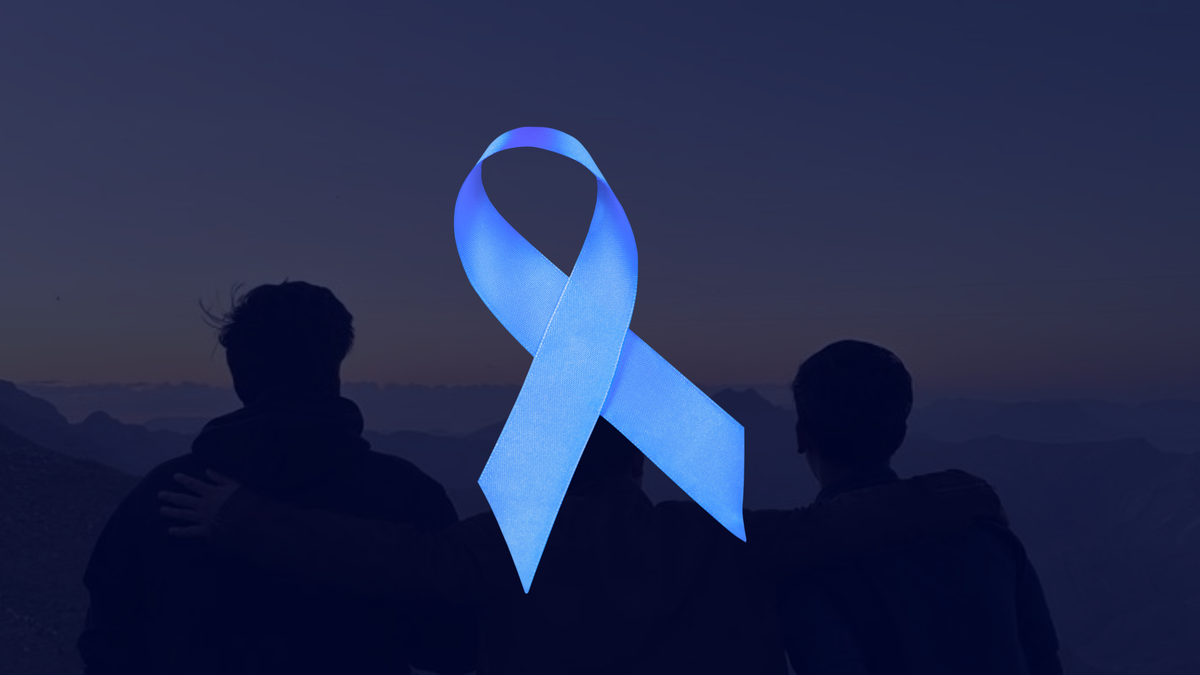

World Cancer Day on February 4, 2026, will have the international theme "United by Unique" .
This refers to an apparent contradiction that describes a central truth in medicine: although people are connected by a diagnosis, they experience illness and health in a profoundly individual way.
Every story is different.
Symptoms, physical conditions, stressors, life circumstances, and needs differ – even when the initial medical situation appears similar. This is precisely why World Cancer Day puts the individual before the disease and calls for a healthcare system that takes individual differences seriously instead of oversimplifying them. This idea is not only relevant to oncology.
Especially in men, the relevance of this individualized approach to cancer medicine becomes clear. In Germany alone, several hundred thousand new cases are diagnosed each year. Among the most common cancers in men are prostate cancer, lung cancer, colorectal cancer, bladder cancer, and skin cancer. These diseases differ not only in their prognosis but also in symptoms, progression, and treatability. An overview of the most frequent new cases and deaths based on tumor location illustrates the breadth of the spectrum—and the importance of early detection, risk awareness, and differentiated diagnostics.


Prostate and testicular cancer are particularly noteworthy as clearly male-specific diseases. Prostate cancer is the most common cancer in men and primarily affects older age groups, while testicular cancer is comparatively rare but predominantly affects younger men. Both diseases share the characteristic of being highly treatable when diagnosed early – yet they are frequently detected too late. Shame, lack of information, and the absence of preventative screenings play a key role in this.
This is precisely where the practical implications of United by Unique become clear: Two men with the same diagnosis can experience completely different disease progressions, side effects, and psychological burdens. Therefore, treatment decisions must not only adhere to guidelines but also be individually justifiable. In our podcast episode with Prof. Heidenreich, we discuss prostate and testicular cancer, modern treatment approaches, and why informed patients play a crucial role in treatment success.
This perspective on cancer is also key to understanding men's health as a whole. Many topics—from hormonal balance and metabolism to mental health—are closely linked to prevention, early detection, and long-term medical support. World Cancer Day reminds us that health doesn't begin with a diagnosis, but with taking a serious look at one's own body. Individualized, informed, and without oversimplification.
But it also affects men's health in general.
When symptoms are ignored for a long time
In our daily work at Adon Health, we repeatedly encounter a similar pattern.
Many men report in retrospect that they felt something had changed over months or years: less energy, reduced resilience, altered libido, longer recovery times, or a general feeling of not being quite themselves. These changes often become normalized.
Stress, age, lack of sleep, or occupational strain are considered obvious explanations. Early measurement is rare, and a differentiated classification is even rarer. This phenomenon is already known in cancer medicine:
Early warning signs are often overlooked or suppressed - not out of indifference, but because they are nonspecific, develop gradually and are difficult to grasp.
What World Cancer Day has to do with prevention
World Cancer Day is initiated by the Union for International Cancer Control and pursues a clear goal: to make healthcare more individualized. A key aspect of this is prevention and early detection.
A significant number of serious illnesses do not develop suddenly, but over years. Changes in the body often announce themselves early on – but are only taken seriously when they noticeably affect daily life. This principle applies not only to cancer.
This also applies to hormonal changes, metabolic processes, and many chronic developments that remain below the threshold of perception for a long time.

Hormone levels as part of holistic men's health
Hormones influence numerous physiological processes:
Energy, muscle growth, regeneration, mood, libido, and metabolism. Changes in hormonal balance usually occur gradually and vary from person to person. That's precisely why measurements are crucial.
Not to initiate immediate treatment, but to classify, understand, and identify developments early on. An altered testosterone level is not a diagnosis or a judgment of illness.
However, it can be an indicator – just like altered blood lipid levels, liver function tests, or inflammatory markers. Without measurement, such indicators remain invisible and therefore unnoticed.
Click here for our extended at-home hormone test.
United by Unique - also in men's health
The concept of United by Unique is also reflected in our approach at Adon Health. We see every day that similar symptoms can have very different causes. What is medically irrelevant for one person can be a crucial factor for another. Medical quality arises where there is no generalization, but rather individual measurement, medical assessment, and clear explanation.
Not every deviation requires treatment. But every relevant deviation deserves attention.
Why are we talking about this?
World Cancer Day is not just a day of remembrance.
It serves as a reminder that health needs attention before symptoms become dominant. For us, this means supporting men in taking changes seriously without dramatizing them, facilitating access to medical diagnostics, and providing clarity.

Conclusion
Health is individual.
But no one should be left alone with the feeling that something is wrong. World Cancer Day highlights the importance of early detection, listening, and tailoring medical processes to the individual. This is precisely the approach we take in men's health. Because good medicine doesn't begin with treatment.
It begins with measuring and understanding one's own values. A possible first step could be a lifestyle lab test , which could then be followed by a consultation with a doctor if needed.


